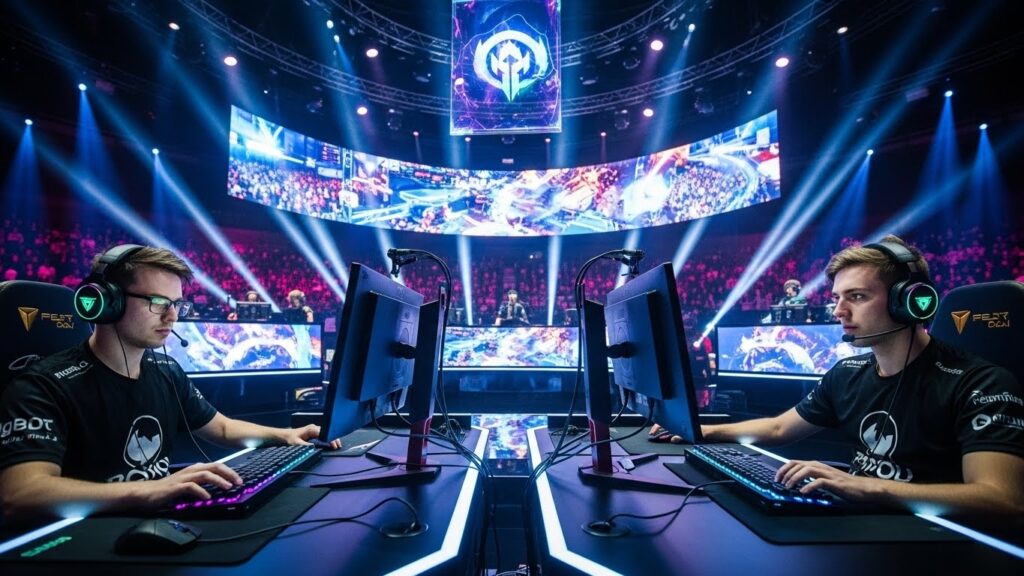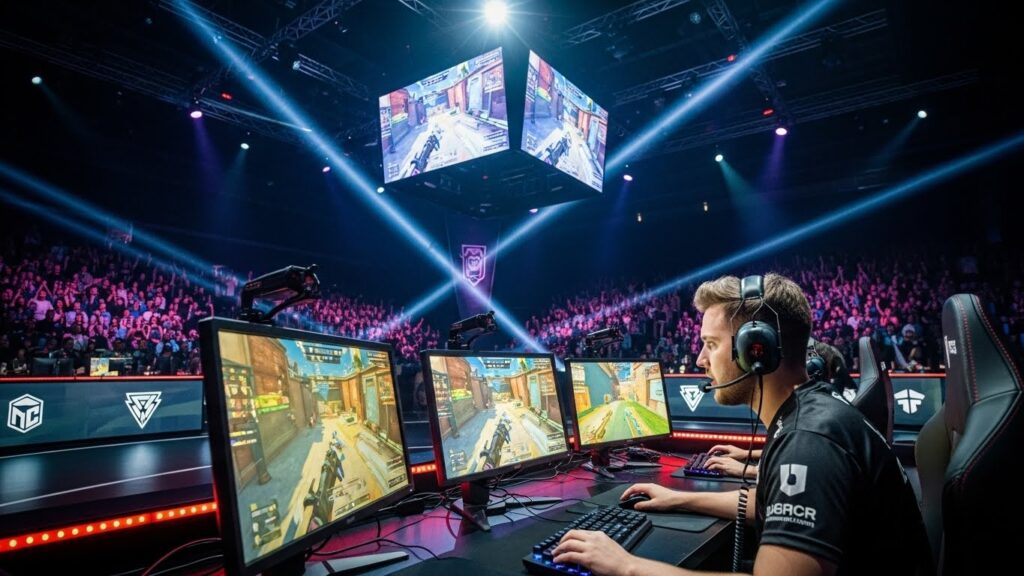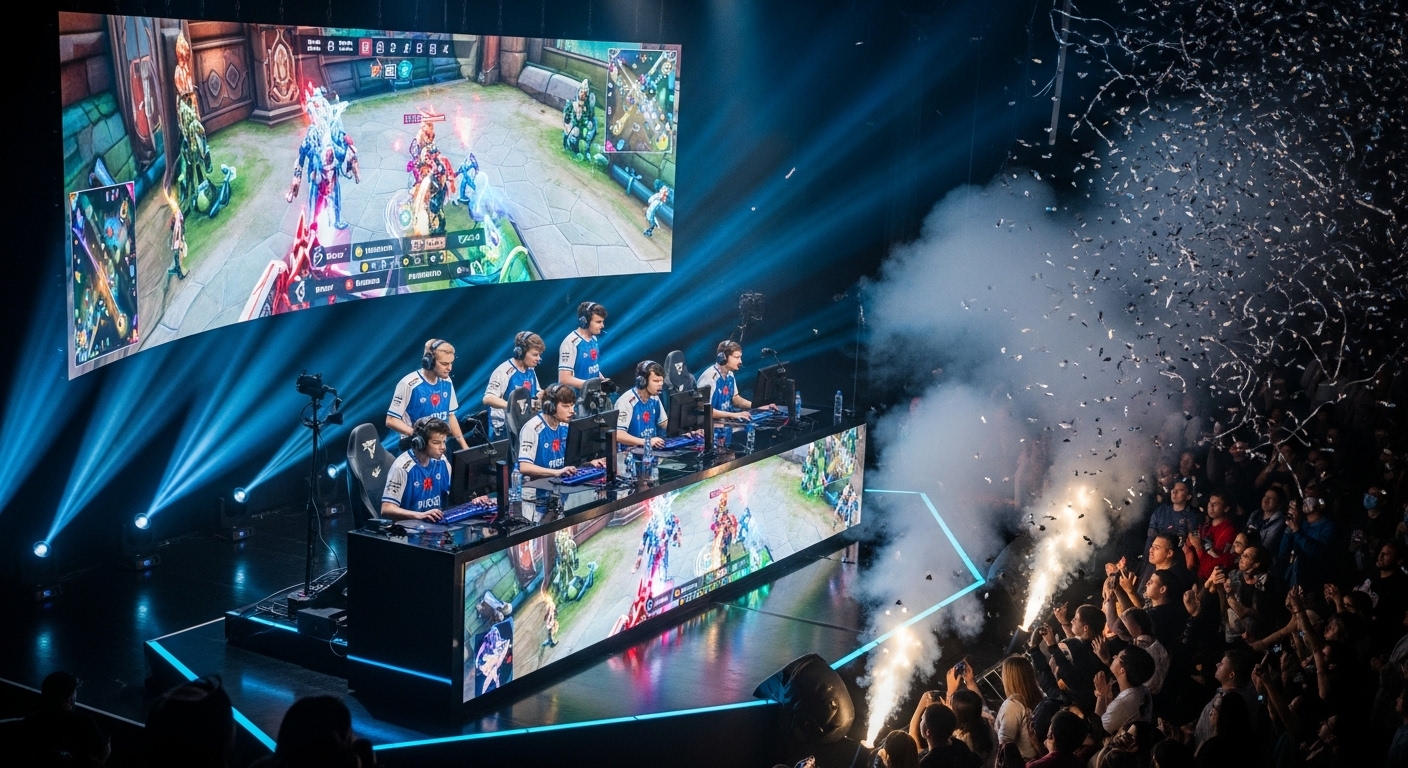
Esports, or electronic sports, is no longer just a niche activity or a pastime for avid gamers. It has transformed into a global phenomenon that has captured the attention of millions of people across the world. From massive tournaments with multi-million-dollar prize pools to professional players achieving celebrity status, esports has emerged as a powerful force in the entertainment industry. But what is esports, and how did it go from a small underground movement to one of the most rapidly growing sectors in the global entertainment landscape? This blog post will explore the origins, evolution, and future of esports, examining the factors that have driven its rise and what lies ahead for this dynamic and ever-expanding industry.
The Early Beginnings: From Arcade Games to Competitive Gaming
The origins of esports can be traced back to the late 20th century, where competitive gaming was an afterthought in the world of video games. In the 1970s and 1980s, arcade games like Pong, Space Invaders, and Pac-Man were gaining popularity. These games were fun to play but didn’t involve organized competition. However, the seeds of esports were planted when people started competing against each other in these arcade settings.
The first known esports competition took place in 1980, when Space Invaders enthusiasts gathered for a national tournament organized by Atari. This event attracted over 10,000 participants and is often considered the first “official” esports event. While the prize pool was modest by today’s standards, the excitement generated by the competition sparked interest in organized gaming events.
In the 1990s, as the internet became more widespread, multiplayer online games began to appear. Titles like Doom and Quake introduced players to online competition, and LAN (Local Area Network) tournaments started to gain popularity. Gamers connected their computers in local venues to compete in fast-paced battles. The success of these tournaments laid the foundation for the growth of esports, especially in countries like South Korea, where competitive gaming would soon become a cultural phenomenon.
The Rise of Esports in South Korea: A Cultural Shift
One of the most important developments in the history of esports took place in South Korea in the late 1990s. The release of StarCraft in 1998 was a pivotal moment in the esports revolution. The real-time strategy game gained immense popularity, particularly in South Korea, where it became a national pastime. The government and telecommunications companies recognized the growing potential of esports and began to invest heavily in the infrastructure needed to support professional gaming.
In 2000, the Korean government officially recognized esports as a legitimate form of entertainment, and in 2001, the Korean e-Sports Association (KeSPA) was founded. South Korea became the birthplace of modern professional esports, with dedicated TV channels like OnGameNet and MBCGame broadcasting esports tournaments. The StarCraft Pro League, which started in 2003, became the first major professional esports league, drawing huge audiences to watch top players compete in front of thousands of spectators.
South Korea’s esports scene became so popular that it was broadcast live on national television, drawing millions of viewers. Professional players, or “pro gamers,” were treated like celebrities, and esports tournaments became major cultural events. The country’s success in esports would serve as a blueprint for the rest of the world, influencing the development of professional gaming leagues and tournaments globally.
The Global Expansion: Esports Takes the World by Storm
While South Korea was the epicenter of competitive gaming in the early 2000s, other regions soon began to catch on. In North America and Europe, organizations like Major League Gaming (MLG) in the United States and ESL (Electronic Sports League) in Europe began to organize large-scale tournaments and events for games like Counter-Strike, Halo, and WarCraft III. These events attracted growing audiences and prize pools, creating a professional circuit for esports players outside of South Korea.
In 2011, the launch of the streaming platform Twitch marked a game-changing moment for esports. Twitch allowed gamers to broadcast their gameplay live to audiences around the world, and this was a turning point for the industry. Suddenly, tournaments could be viewed by millions of people online, making esports accessible to a much larger audience. The popularity of live-streaming gaming content led to the creation of a thriving online community, with esports players and fans connecting through streams, social media, and chat rooms.
By the mid-2010s, esports had exploded into a multi-billion-dollar industry. Popular games like League of Legends, Dota 2, Counter-Strike: Global Offensive, Overwatch, and Fortnite attracted millions of players and fans, while big-name companies like Intel, Coca-Cola, and Red Bull began sponsoring major esports events. The increasing visibility of esports in mainstream media, including coverage on TV channels and partnerships with traditional sports leagues, further solidified its place in the entertainment world.
The Infrastructure of Modern Esports: Teams, Tournaments, and Sponsorships
Today’s esports ecosystem is highly organized and professional. Esports organizations, or “teams,” now operate similarly to traditional sports teams, with managers, coaches, analysts, and support staff working alongside the players to maximize performance. These teams sign contracts with players, pay salaries, and provide training facilities, just like in traditional sports.
The most successful esports organizations field teams in a variety of games, often employing multiple players who specialize in different titles. For example, Cloud9 and Team Liquid are major esports organizations that compete in League of Legends, Counter-Strike: Global Offensive, Dota 2, and Valorant. These teams participate in professional leagues and tournaments, often competing for multi-million-dollar prize pools.
Esports tournaments have become massive spectacles, often attracting audiences of thousands in-person and millions more online. The International (TI) for Dota 2, for example, is one of the largest esports tournaments in terms of prize money. In 2021, the prize pool for TI was over $40 million, a staggering amount that reflects the growing financial stakes in the industry.
Beyond prize money, esports has also attracted significant sponsorships from major brands. Companies like Audi, Red Bull, Nike, and Samsung are just a few of the names that have partnered with esports teams and tournaments. These sponsorships are vital for the financial stability of the esports ecosystem, and they help to further legitimize esports as a global entertainment industry.
Esports and Traditional Sports: The Blurring of Boundaries
One of the most fascinating trends in recent years is the growing relationship between esports and traditional sports. Professional sports leagues, including the National Basketball Association (NBA) and the National Football League (NFL), have recognized the potential of esports and invested in it. The NBA has even launched its own esports league, the NBA 2K League, which is based on the popular NBA 2K video game series. Similarly, football clubs like FC Barcelona and Manchester City have started to field their own esports teams, competing in games like FIFA and eFootball.
The overlap between esports and traditional sports doesn’t stop there. Many esports athletes are treated with the same level of fame and respect as their counterparts in traditional sports. Professional esports players now have large social media followings, sign sponsorship deals, and even participate in brand endorsements. Some players, like Ninja (Tyler Blevins), have become global celebrities, appearing on talk shows, collaborating with brands, and building massive fanbases beyond the gaming community.
As the lines between esports and traditional sports continue to blur, it is clear that both industries are learning from each other. Esports is adopting practices like team management, sponsorships, and broadcasting, while traditional sports are increasingly looking to esports as a source of innovation and fan engagement.
The Future of Esports: Innovations and Growth
The future of esports looks incredibly bright, with multiple factors contributing to its continued growth. One of the key drivers is the rise of mobile gaming. Mobile esports tournaments, particularly in titles like PUBG Mobile, Free Fire, and Mobile Legends, have exploded in popularity in regions such as Southeast Asia, India, and Latin America. As smartphones become more powerful, mobile esports will likely continue to grow, bringing competitive gaming to an even larger global audience.
Additionally, the development of virtual reality (VR) and augmented reality (AR) could significantly change the landscape of esports. VR esports, where players compete in fully immersive virtual worlds, is still in its infancy, but it has the potential to revolutionize the way competitive gaming is played and viewed. As VR technology becomes more accessible and affordable, it could become a significant part of the esports ecosystem, attracting both players and fans.
Another major trend is the growing presence of women in esports. While the industry has historically been male-dominated, more women are now making their mark as professional players, streamers, and content creators. Organizations like Women in Esports are working to ensure that women have a platform to showcase their talent and contribute to the growing industry.
Finally, esports will continue to expand into new markets, with increased investment in regions like Africa and the Middle East. As internet infrastructure improves and gaming becomes more accessible, these regions will likely see a rise in both players and fans, further fueling the global growth of esports.
Conclusion: Esports is Here to Stay
Esports has gone from humble beginnings to becoming a global cultural phenomenon, attracting millions of players and fans around the world. With professional leagues, sponsorships from major brands, and tournaments offering multi-million-dollar prize pools, esports is now a serious and lucrative industry. As it continues to evolve, esports will play an increasingly important role in shaping the future of entertainment, blending the worlds of gaming, sports, and digital culture.